Crypto Derivatives Futures Explained: Crypto Derivatives Futures Explained
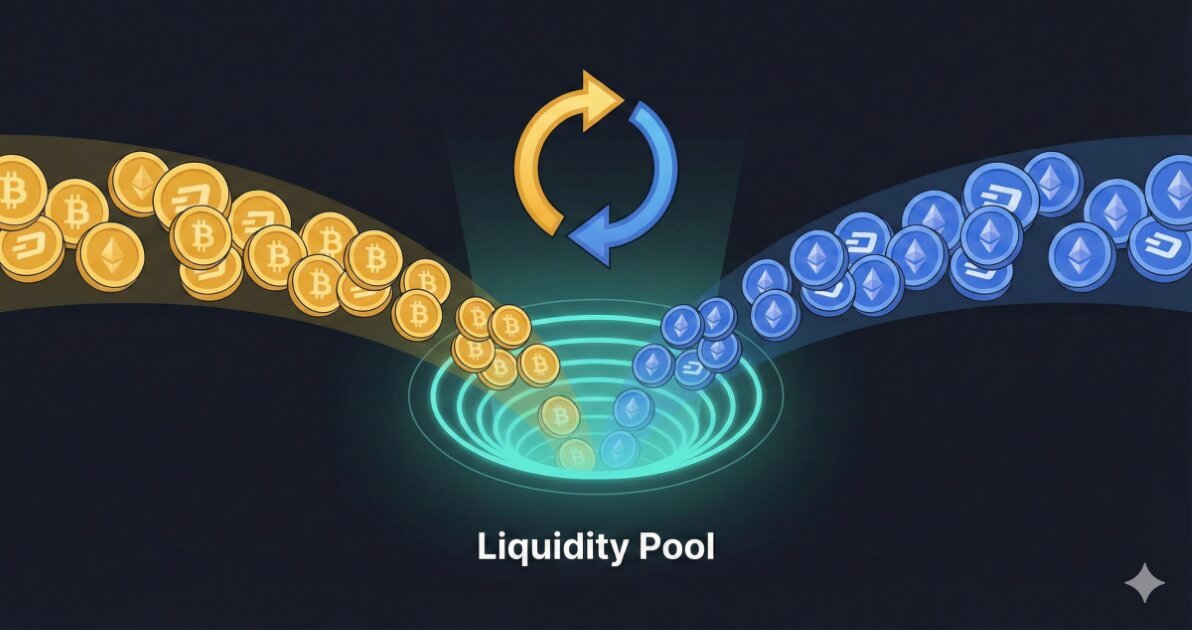
Crypto futures are standardized derivatives contracts obligating the buyer to purchase, or the seller to deliver, an underlying crypto asset at a predetermined price on a specified future date. Unlike spot trading, futures enable leveraged directional bets, hedging, and basis arbitrage without transferring the underlying token until settlement. This article covers settlement mechanics, margining systems, funding rate calculations, and the structural trade-offs that separate perpetual swaps from expiring contracts.
Settlement Types and Mechanics
Crypto futures settle in two primary modes. Physically settled contracts deliver the underlying asset at expiry. The long receives BTC, ETH, or the contract’s reference asset; the short delivers it. Cash settled contracts compute profit and loss in a quote currency, typically USDT, USDC, or USD, without transferring the base asset. The settlement price is derived from a reference index, often a volume weighted average across multiple spot exchanges during a pre-specified calculation window.
Perpetual futures, also called perpetual swaps, never expire. Instead of settlement, they use a funding rate mechanism to anchor the contract price to the spot index. Every funding interval, longs pay shorts when the perpetual trades above the index, or shorts pay longs when it trades below. The funding rate typically equals the time weighted difference between the perpetual mid price and the index, divided by the funding period (commonly eight hours). This rate is exchanged directly between traders; the exchange collects no funding fees beyond standard trading commissions.
Expiring futures carry a fixed maturity date. Quarterly and monthly expirations are common. Traders close positions before expiry or accept automatic settlement at the final index price. Basis, the difference between the futures price and the spot index, decays to zero as expiry approaches, creating predictable convergence trades.
Margin and Liquidation
Futures exchanges enforce margin requirements to limit counterparty risk. Initial margin is the collateral required to open a position. Maintenance margin is the minimum equity needed to keep it open. When mark to market equity falls below maintenance margin, the exchange liquidates the position.
Mark price, not last traded price, determines liquidation. Exchanges compute mark price using a fair price index to prevent manipulation via thin order book prints. A typical formula blends the spot index with the current order book mid price, weighted by liquidity depth.
Liquidation engines vary. Some exchanges close the entire position at the bankruptcy price, the level at which remaining equity exactly covers unrealized losses. Others use partial liquidation, closing only enough of the position to restore maintenance margin. Insurance funds absorb losses when liquidations execute below bankruptcy price. If the insurance fund depletes, some platforms socialize losses by clawing back a percentage of winning traders’ profits from that settlement period.
Cross margin pools collateral across all positions in a margin account. Unrealized profit from one position offsets unrealized loss in another, reducing liquidation risk but exposing the entire account if one position moves sharply against you. Isolated margin assigns a fixed collateral amount to each position. Maximum loss per position is capped at the isolated margin balance, but you cannot benefit from cross position netting.
Leverage and Notional Exposure
Leverage amplifies both returns and losses. A 10x leveraged long means you control ten units of notional exposure with one unit of collateral. If the underlying rises 5 percent, your equity increases 50 percent. If it falls 5 percent, you lose 50 percent.
Maximum leverage varies by exchange, asset volatility, and position size. Retail focused platforms historically offered 100x or 125x on BTC futures; many have reduced this to 20x or 50x following regulatory scrutiny. Altcoin futures typically cap at 20x or lower due to thinner liquidity and higher volatility.
Position size tiers impose stepped margin requirements. A small BTC perpetual position might require 1 percent initial margin (100x max leverage), while a position exceeding a notional threshold, say five million USD equivalent, requires 5 percent initial margin (20x max). This tiered structure reduces systemic risk from oversized positions.
Funding Rates and Basis Arbitrage
Funding rates equilibrate perpetual futures prices with spot. When aggregate market positioning skews long, the funding rate turns positive, increasing the cost of holding longs and incentivizing shorts. The opposite occurs when positioning skews short.
A typical funding formula:
Funding Rate = (Perpetual TWAP - Index TWAP) / Funding Interval
Some exchanges add an interest rate component reflecting the cost of borrowing the quote currency versus the base asset, though this is often negligible for stablecoin margined contracts.
Basis arbitrage exploits deviations between futures and spot. A positive basis (futures trading above spot) creates a cash and carry opportunity: buy spot, short futures, earn the basis as it converges at expiry. For perpetual swaps, you collect negative funding (paid by longs) instead of waiting for expiry. The reverse trade, buying underpriced futures and shorting spot, works when basis turns negative.
Transaction costs, funding volatility, and exchange risk limit arbitrage efficiency. Transferring collateral between spot and derivatives venues introduces latency and withdrawal fees. Funding rates can swing sharply during volatile periods, turning profitable carries into losses before you exit.
Worked Example: Quarterly Basis Trade
Suppose BTC spot trades at 42,000 USDT. The quarterly futures contract expiring in 90 days trades at 43,200 USDT, implying a 1,200 USDT basis or roughly 2.9 percent annualized.
You execute a basis trade by buying 1 BTC on the spot market for 42,000 USDT and selling one quarterly futures contract at 43,200 USDT. At expiry, the futures contract settles to the spot index price. If BTC spot rises to 50,000 USDT:
- Spot position gains 8,000 USDT.
- Futures position loses 6,800 USDT (50,000 settlement minus 43,200 entry).
- Net profit: 1,200 USDT, the captured basis.
If BTC falls to 35,000 USDT:
- Spot position loses 7,000 USDT.
- Futures position gains 8,200 USDT (43,200 entry minus 35,000 settlement).
- Net profit: still 1,200 USDT.
The directional move cancels. Your profit equals the basis, minus funding costs for holding spot collateral and any fees paid on entry and settlement.
Common Mistakes and Misconfigurations
- Using last price instead of mark price for risk assessment. Mark price determines liquidation; ignoring it leads to surprise liquidations during low liquidity volatility spikes.
- Leaving positions in cross margin mode without monitoring aggregate exposure. A single bad position can cascade and liquidate unrelated trades.
- Ignoring funding rate volatility on perpetual swaps. Funding can exceed the expected profit from a directional trade during periods of extreme skew.
- Failing to account for tiered margin requirements when scaling position size. Doubling your position may more than double your margin requirement, reducing effective leverage.
- Executing basis trades without confirming settlement index methodology. Different exchanges use different calculation windows and outlier filters; settlement price can deviate from your expected spot reference.
- Assuming insurance funds are unlimited. During sharp liquidation cascades, insurance funds can deplete, leading to socialized losses or auto deleveraging of profitable positions.
What to Verify Before You Rely on This
- Current maximum leverage limits and tiered margin schedules for your target contract and position size.
- Mark price calculation formula, including how the spot index is constructed and weighted.
- Funding rate interval, calculation methodology, and whether an interest rate component is included.
- Settlement index specification: calculation window duration, contributing exchanges, and outlier exclusion rules.
- Insurance fund balance and historical depletion events, if the exchange publishes this data.
- Auto deleveraging (ADL) queue mechanics and whether your position could be closed involuntarily during extreme events.
- Withdrawal processing times and fees for moving collateral between spot and derivatives accounts or across exchanges.
- Regulatory restrictions on leverage, perpetual availability, or account eligibility in your jurisdiction.
- Contract specifications for expiring futures: tick size, minimum notional, expiry timestamp, and early settlement options.
- API rate limits and order types supported if you plan algorithmic execution or high frequency rebalancing.
Next Steps
- Paper trade a small perpetual position in cross and isolated margin modes to observe liquidation behavior and funding accrual across multiple intervals.
- Calculate break even funding rates for a basis trade between spot and a quarterly contract, factoring in exchange fees, withdrawal costs, and slippage estimates.
- Monitor funding rate distributions and basis term structures across major exchanges to identify recurring arbitrage windows and liquidity imbalances.
Category: Crypto Derivatives