Transaction Execution and Settlement Mechanics on Centralized Crypto Exchanges
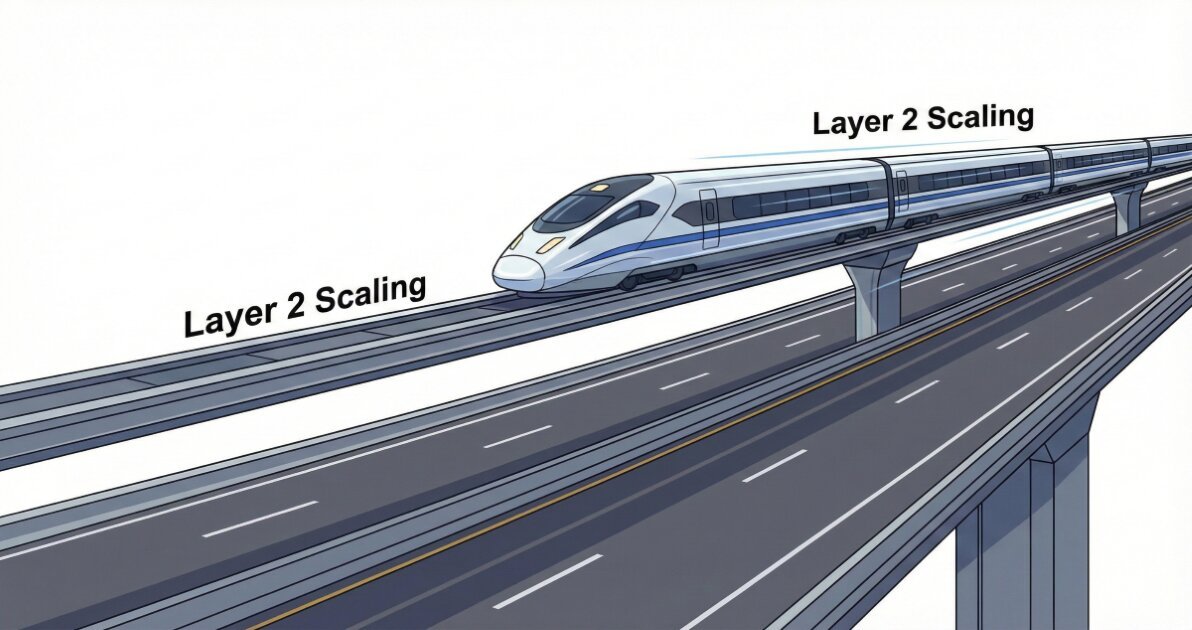
When you submit an order to a centralized exchange, the exchange does not immediately broadcast a blockchain transaction. Instead, it updates its internal ledger, matches your order against its order book, and settles the result in its custody system. The blockchain only enters the picture when you deposit or withdraw assets. Understanding this split between onchain and offchain execution is essential for evaluating counterparty risk, verifying fills, and troubleshooting failed withdrawals.
This article examines how centralized exchanges handle transaction execution, the difference between internal settlement and blockchain finality, and the specific points where liquidity, custody, and network state intersect.
Internal Ledger Settlement vs. Blockchain Transactions
Centralized exchanges operate dual ledgers. The first is an internal database that tracks user balances and open orders. When you place a market or limit order, the matching engine executes against this ledger. Settlement happens in milliseconds, and the exchange credits or debits your account balance accordingly.
The second ledger is the blockchain itself. Deposits and withdrawals require onchain transactions, but intra-exchange trades do not. This design drastically reduces latency and gas costs, but it also means your balance is a liability claim against the exchange, not a UTXO or account state you control.
When you initiate a withdrawal, the exchange constructs and signs a blockchain transaction from its hot or warm wallet. That transaction enters the mempool, waits for miner or validator inclusion, and achieves finality according to the network’s consensus rules. The exchange typically waits for a minimum number of confirmations before marking the withdrawal complete on your account page.
Order Execution Mechanics and Fill Guarantees
Market orders on centralized exchanges execute at the best available price in the order book at the moment of matching. The exchange does not guarantee a specific fill price, only that it will match you against existing limit orders according to price-time priority.
Limit orders join the order book and wait for a counterparty. The exchange provides no slippage protection beyond the limit price you specify. If the market moves past your limit without filling your entire order, the remainder stays open or expires according to your time in force instruction (GTC, IOC, FOK).
Stop orders and stop-limit orders depend on the exchange’s mark price or last traded price to trigger. Different exchanges use different reference prices, and during volatile periods the trigger logic can behave unpredictably if the order book thins or if the exchange applies circuit breakers.
Partial fills are common for large orders. The exchange splits your order across multiple limit orders in the book, and you pay the taker fee on each matched portion. Some exchanges offer iceberg orders or other algorithms to reduce market impact, but the core execution model remains the same: you trade against the liquidity the exchange has aggregated from other users.
Withdrawal Transaction Construction and Signing
When you request a withdrawal, the exchange validates your address, checks your balance and any withdrawal limits, then queues the transaction for processing. Most exchanges batch withdrawals to reduce onchain fees. Your withdrawal may sit in a pending state for minutes or hours while the exchange accumulates other withdrawal requests and constructs a single transaction with multiple outputs.
The exchange signs the transaction using private keys stored in its hot wallet (for immediate processing) or warm wallet (for larger amounts requiring additional approval steps). Cold wallet withdrawals typically require manual intervention and take longer.
Once broadcast, the transaction competes for block inclusion based on the fee the exchange attached. During periods of network congestion, exchanges may underpay fees, causing withdrawals to delay or require fee bumping via replace-by-fee (RBF) or child-pays-for-parent (CPFP) techniques.
Confirmation thresholds vary by asset and exchange. Bitcoin withdrawals often require three to six confirmations before the exchange marks the transaction as final. Ethereum and EVM-compatible chains typically require 12 to 30 confirmations. These thresholds reflect the exchange’s risk tolerance for chain reorganizations.
Deposit Transaction Verification and Crediting
When you send assets to your exchange deposit address, the exchange monitors the blockchain for incoming transactions. It waits for the transaction to accumulate the required number of confirmations, then credits your internal balance.
Different exchanges apply different confirmation requirements based on the asset’s consensus mechanism and historical reorg risk. Assets with low hashrate or staking participation may require dozens of confirmations. High-value deposits may trigger additional compliance checks that delay crediting even after the blockchain confirms the transaction.
If you send an asset to the wrong chain (for example, sending USDT on Tron to an Ethereum deposit address), the exchange typically cannot recover the funds. Address formats and checksums differ across chains, but user error remains common. Some exchanges offer recovery services for a fee, but success depends on whether the exchange controls the private key for the destination address on the alternate chain.
Failure Modes and Recovery Paths
Exchange downtime during volatile markets can prevent order cancellations, leaving you exposed to adverse price movements. Exchanges do not compensate for losses incurred while their matching engine is offline unless they explicitly acknowledge a system fault.
Withdrawal delays occur when the exchange’s hot wallet runs low on a specific asset. The exchange must transfer funds from cold storage, a process that may take hours or days depending on internal procedures and required approvals.
Transaction broadcasting failures happen when the exchange miscalculates the required fee or when the network rejects the transaction due to nonce conflicts or other validation errors. Most exchanges retry automatically, but manual intervention may be necessary.
Address poisoning attacks involve sending dust to your withdrawal history from a similar looking address. If you copy the wrong address from your transaction history, you may send funds to an attacker. Always verify the full address character by character and use address whitelists when available.
Worked Example: Cross-Exchange Arbitrage Settlement
You identify a price discrepancy: BTC trades at 45,200 USDT on Exchange A and 45,350 USDT on Exchange B. You hold 1 BTC on Exchange A and 50,000 USDT on Exchange B.
-
On Exchange A, you place a market sell order for 1 BTC. The exchange matches your order against the top bid at 45,200 USDT and credits your account with 45,155 USDT (after a 0.1 percent taker fee). This settlement occurs entirely on Exchange A’s internal ledger and completes in under 100 milliseconds.
-
On Exchange B, you place a market buy order for 1 BTC at 45,350 USDT. The exchange debits 45,395.35 USDT from your account (including a 0.1 percent taker fee) and credits 1 BTC to your balance. Again, this happens offchain within Exchange B’s system.
-
You now hold 1 BTC on Exchange B and 45,155 USDT on Exchange A. To rebalance for the next trade, you withdraw 45,000 USDT from Exchange A to Exchange B. Exchange A constructs a blockchain transaction, typically using USDT on Ethereum or Tron depending on which network you selected. The withdrawal enters pending status.
-
Exchange A batches your withdrawal with others and broadcasts a transaction with a fee of 20 Gwei (if Ethereum). The transaction confirms in the next block, roughly 12 seconds later.
-
Exchange B detects the incoming USDT transaction and waits for 12 confirmations, which takes approximately 2.4 minutes. After confirmation, it credits your account.
-
Total arbitrage profit: 45,350 minus 45,200 equals 150 USDT gross, minus trading fees of approximately 90 USDT and withdrawal fees (variable by network and exchange), leaving you with 60 USDT profit if withdrawal fees are modest. The entire cycle took under five minutes, but market prices could have moved during the withdrawal and crediting delay, eliminating or reversing the profit.
Common Mistakes and Misconfigurations
- Ignoring confirmation requirements: Assuming a deposit is available as soon as it appears in the mempool. Exchanges credit only after their specified confirmation threshold, which can be 30 or more blocks for some assets.
- Using market orders in thin books: Executing a large market order when the order book lacks depth. You may experience extreme slippage as the order walks through multiple price levels.
- Failing to check withdrawal network: Selecting the wrong blockchain network for a USDT or USDC withdrawal. Sending ERC-20 USDT to a Tron address (or vice versa) typically results in permanent loss unless the exchange controls keys on both chains and offers recovery.
- Misunderstanding stop order triggers: Assuming a stop loss will execute at your stop price. Stop orders trigger market orders, which execute at the next available price. During cascading liquidations, your fill can be far worse than your stop price.
- Relying on exchange uptime during volatility: Expecting to cancel orders or withdraw funds during exchange outages or maintenance windows. Exchanges often disable withdrawals or halt trading during system stress.
- Batching withdrawal timing assumptions: Expecting instant withdrawal processing. Many exchanges batch withdrawals every 15 to 60 minutes, adding latency before your transaction even reaches the mempool.
What to Verify Before You Rely on This
- Current confirmation requirements for each asset you deposit or withdraw. Exchanges adjust these thresholds in response to network attacks or consensus changes.
- Withdrawal fee schedule and whether fees are fixed or dynamic based on network congestion. Some exchanges pass through the exact onchain fee, others charge a flat rate.
- Network selection options for multi-chain assets (USDT, USDC, WBTC). Confirm the exchange supports the network you intend to use and that the receiving platform accepts deposits on that network.
- Order type behavior and fill logic in the exchange’s API or UI documentation. Stop order trigger mechanisms vary significantly across exchanges.
- Withdrawal processing times and batch schedules. Check the exchange’s status page or support documentation for typical and maximum processing windows.
- Cold wallet refill policies. If an asset shows low hot wallet reserves, confirm whether the exchange has a public commitment to refill within a specific timeframe.
- Insurance or compensation policies for exchange-side errors. Most exchanges disclaim liability for system downtime, but a few offer limited protection for specific failure modes.
- Address format validation and recovery procedures. Know what happens if you send funds to an incorrect or unsupported address format.
Next Steps
- Audit your current exchange balances and compare them against recent trade and withdrawal history. Verify that internal ledger updates match your expectations and that no unrecognized transactions appear.
- Test a small withdrawal on each network you plan to use. Measure actual confirmation times and total cost (exchange fee plus onchain fee) to build a realistic model of settlement speed.
- Set up transaction monitoring for your deposit addresses using a block explorer or notification service. Track confirmation progress in real time rather than relying solely on the exchange’s internal status updates.
Category: Crypto Exchanges
Related Stories
Washington State Crypto Exchange Licensing and Operational Requirements

White Label Crypto Exchange Cost Structure and Hidden Variables