Swap Crypto Exchange Architecture and Execution Mechanics
Swap crypto exchanges let traders exchange one digital asset for another without placing traditional order book bids or asks. Instead, they use automated market makers (AMMs), request for quote (RFQ) aggregators, or hybrid routing engines to provide instant price discovery and execution. This article examines the core mechanics, routing logic, and operational nuances that determine execution quality on swap exchanges.
Core Execution Models
Swap exchanges implement three primary models, each with distinct trade execution paths.
AMM pools hold reserve pairs in smart contracts. Price derives from the ratio of reserves according to a bonding curve, typically constant product (x × y = k) or variants like stable swap curves for correlated assets. When you swap, the contract adjusts reserves and returns output tokens according to the curve. No counterparty negotiation occurs. Slippage depends on trade size relative to pool depth.
RFQ systems broadcast your swap intent to market makers who return signed quotes with fixed prices and expiration timestamps. The aggregator selects the best quote, you sign the swap transaction, and the contract verifies signatures and settles atomically. Market makers absorb inventory risk and set spreads based on volatility, order size, and their hedging costs.
Hybrid routers split orders across multiple venues. A single swap might execute 40% through a Uniswap V3 concentrated liquidity position, 30% via an RFQ quote, and 30% through a Curve pool. The router simulates all feasible paths onchain or offchain, computes net output after gas costs, and constructs a multicall transaction that executes the optimal route atomically.
Price Impact and Slippage Mechanics
Price impact and slippage are related but distinct. Price impact is the proportional change in marginal price caused by your trade size moving the AMM curve. For constant product pools, impact approximates tradeSize / (2 × poolReserve) for small trades. Larger trades face superlinear impact as the curve steepens.
Slippage is the difference between expected price at transaction construction and actual execution price. It includes price impact plus any adverse movement during the block confirmation window. You specify maximum acceptable slippage as a percentage. If actual slippage exceeds your tolerance, the transaction reverts.
Concentrated liquidity pools (Uniswap V3 style) reduce price impact within active tick ranges but create cliffs at range boundaries. A trade that exhausts liquidity in one tick range jumps to the next, potentially incurring sharp impact spikes. Routers must model these discontinuities when optimizing paths.
Gas Cost Optimization in Routing
Gas costs dominate small swaps and influence route selection even on large trades. A direct swap through one pool might cost 120,000 gas. A three hop route (Token A to WETH to USDC to Token B) might yield 0.3% better price but consume 350,000 gas. At 30 gwei and ETH at $2,000, the three hop route costs an extra $14. The router must net gas expense against price improvement.
Some routers cache gas cost estimates offchain and update them periodically. Others simulate routes onchain during the transaction itself, which guarantees accuracy but adds latency and execution risk if network conditions shift between simulation and settlement.
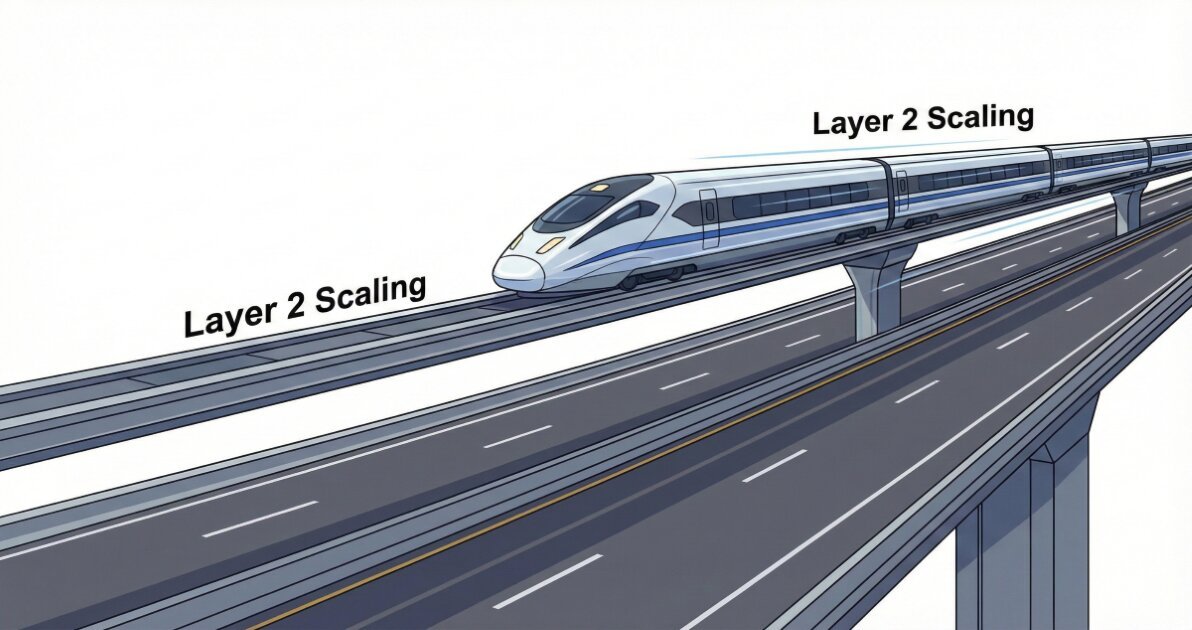
Layer 2 networks reduce absolute gas costs but do not eliminate the optimization problem. Route complexity still scales gas linearly, and sequencers may prioritize transactions differently than Ethereum mainnet, altering effective execution latency.
Worked Example: Routing a 50 ETH to USDC Swap
You initiate a 50 ETH to USDC swap on a hybrid aggregator. The router queries:
- Uniswap V3 ETH/USDC 0.05% pool: 1,200 ETH liquidity concentrated between $1,950 and $2,050. Estimated output: 99,200 USDC. Price impact: 0.4%. Gas: 130,000.
- Curve stETH/ETH pool + Curve stETH/USDC pool: Two hop route. First swap yields 49.95 stETH (0.1% impact). Second swap yields 99,100 USDC (0.3% impact). Combined gas: 280,000.
- RFQ quote from market maker: 99,350 USDC, valid 30 seconds, gas: 110,000.
At 25 gwei and ETH at $2,000, gas costs are $6.50 (RFQ), $8.45 (Uniswap V3), and $14 (Curve). Net outputs after gas in USDC terms: RFQ 99,343, Uniswap V3 99,191, Curve 99,086.
The router selects the RFQ path, constructs the transaction with a 0.5% slippage tolerance (minimum output 98,846 USDC), and submits it. If the market maker’s quote expires before inclusion, the transaction reverts and you retry.
Failure Modes and Reverts
Swap transactions revert under several conditions. Slippage tolerance breaches are most common. If network congestion delays your transaction by two blocks and ETH price drops 0.8%, your expected output falls below the minimum you specified, triggering a revert.
Liquidity removal between simulation and execution also causes reverts. An LP withdrawing a large position can empty a pool’s active range, leaving insufficient reserves for your swap. Routers mitigate this by splitting across multiple pools, but single pool swaps remain vulnerable.
Reentrancy attacks on poorly implemented swap contracts can allow malicious tokens to drain reserves mid swap. Reputable aggregators whitelist tokens and use reentrancy guards, but custom or new tokens carry execution risk beyond price volatility.
Front running bots monitor the mempool for large swaps, submit higher gas price transactions that trade ahead of you, and profit from the price impact you create. This “sandwiching” worsens your effective slippage. Private mempools and MEV protection services (Flashbots Protect, MEV Blocker) submit transactions directly to block builders, reducing but not eliminating this risk.
Common Mistakes and Misconfigurations
- Setting slippage tolerance too tight on volatile pairs: A 0.1% tolerance on a memecoin with 5% per minute volatility guarantees reverts. Match tolerance to asset volatility and expected confirmation time.
- Ignoring gas cost on small swaps: Swapping $50 of a token on Ethereum mainnet at 50 gwei can cost $15 in gas, a 30% effective fee. Use L2s or batch swaps with other transactions.
- Approving unlimited token spend: Many interfaces request infinite approval for convenience. If the swap contract is exploited later, attackers drain all approved tokens from your wallet. Approve exact amounts or revoke approvals post swap.
- Using stale price quotes in RFQ systems: If you delay signing after receiving a quote, it expires. The transaction consumes gas but reverts without executing the swap.
- Routing through unvetted pools: Fake pools with manipulated reserves offer attractive quotes but steal deposited tokens. Verify pool addresses against official registries before swapping.
- Neglecting token tax or rebase mechanics: Some tokens deduct fees on transfer or adjust balances algorithmically. Routers may not account for these, causing output shortfalls even within slippage tolerance.
What to Verify Before You Rely on This
- Pool contract addresses and fee tiers for the pairs you trade. Phishing sites clone interfaces with malicious contract addresses.
- Current gas price and network congestion. Estimate total transaction cost in dollar terms, not just percentage slippage.
- Token whitelist status on the aggregator. Unlisted tokens may lack price feed validation or reentrancy protection.
- Slippage tolerance defaults in the interface. Some set 3% automatically, which is excessive for stablecoin swaps but insufficient for volatile pairs.
- MEV protection availability. Check whether the aggregator supports private RPC endpoints or integrated MEV mitigation.
- Recent exploit history of the router contract. Review audit reports and on chain incident trackers for unresolved vulnerabilities.
- Liquidity depth in the pools your route uses. Aggregator UIs often show estimated output but not the reserve sizes backing that quote.
- Token approval status in your wallet. Revoke old approvals to contracts you no longer use.
- Layer 2 bridge finality times if swapping across chains. Funds may be locked during the challenge period.
- Fee structures for RFQ market makers. Some charge spread implicitly. Others add explicit basis point fees.
Next Steps
- Simulate your intended swap using the aggregator’s API or interface in “preview” mode. Compare quoted output across multiple aggregators to identify discrepancies that suggest routing inefficiencies or stale data.
- Set up transaction monitoring with block explorers or wallet tools that decode swap parameters. Review actual slippage, gas consumed, and route taken on past swaps to calibrate future tolerance settings.
- For recurring swaps or DCA strategies, script interactions using the aggregator’s SDK or direct contract calls. This eliminates UI friction, enables precise approval management, and lets you implement custom slippage logic based on real time volatility feeds.
Category: Crypto Exchanges
Related Stories
Washington State Crypto Exchange Licensing and Operational Requirements

White Label Crypto Exchange Cost Structure and Hidden Variables